


The Origin & History of Tarot

Many people have explored the origins of Tarot, but I would like to share my insights to help you understand its history, if you're interested. Over the past hundred years, Tarot has been used as a card game and for fortune-telling. However, it's only been in the past couple of decades that Tarot has been recognized as a tool to amplify one's inner voice of intuition.
Initially, Tarot was simply a regular deck of playing cards. It was not intended to intuit personal insight, divination, or fortune-telling. The earliest decks of the Tarot varied in their number of cards. They were created, for the most part, for entertainment purposes and occasionally for educational purposes.
But where do the cards come from? The origin of the Tarot has yet to be discovered. Some say the Tarot may have originated in China, India, Persia, Saudi Arabia, Europe, or Egypt. However, this has never been proven. Some of these connections have been encouraged to deepen the mystery and sales of the cards themselves.
Regular playing cards are known to have existed in China and the Middle East as early as the 10th century. However, these cards were very different from cards found later in Europe and weren't considered Tarot cards. Furthermore, "Tarot" is likely derived from the Italian word for cards, "Tarocchi." This word is recorded in Italy during the 15th century, when many believe the game of Tarot originated as it is used today. They were known as "Taraux" in France around the same time.
In the beginning, a deck of Tarot contained only twenty-two cards with images. These images varied depending on the area in which they were created and the hand-painting method used. For example, older cards designed in the area that now comprises Germany were illustrated with scenes of kings, queens, and animals. Images created on the cards were left to the artist's discretion, based on what he favored or considered popular at the time. For example, in 1424, the Greek Emperor visited Filippo Maria Visconti, Duke of Milan (Italy), to request assistance against the Ottomans. During his visit, he offered to commission a deck of cards. Sixteen Greek gods were chosen as images. The duke's wife soon gave birth to a daughter, Bianca Maria Visconti, who, years later, was involved in the production of "Carte da Trionfi", which was much later referred to as "Tarot" decks.
Other decks from other parts of the world featured scenes from religious or Greek mythology. Some even included images of daily tasks, such as carving meat. Later, images of the Empress and the Emperor, the High Priestess (a female figure of authority), and the Hierophant (a male figure of authority) emerged. Still, these cards were primarily used for card games rather than metaphysical purposes.
As time passed, images changed, and card-playing came under increasing scrutiny by the Church. Gambling was outlawed. Any images that appeared to be religious in any way were removed. These card images were replaced with others because the Church deemed them blasphemous. In 1432, the Church denounced card-playing as "the work of the devil." And again, in the 1570s, the Church outlawed card playing (gambling) and theatre because both were seen as worshipping false gods. However, Tarot was not banned, as it had become a recreational mainstay in upper-class society by this time.
Eventually, another fifty-six cards were added to the deck as "Suits". It was only when the suits were added that the original 22 cards came to be known as the Major Arcana, considered archetypal. Each of the twenty-two cards represents an archetype that conveys an important lesson one is learning or needs to learn to become whole.
Each of the four suits, known as the Minor Arcana, contains fourteen cards labeled Ace, King, Queen, Knight, Page, and nine additional cards numbered from 2 to 10. The Suits comprise Wands, Swords, Cups, and Coins (some say Pentacles). The suits represent facets of everyday life: human passions and desires (Wands), thoughts and conflicts (Swords), emotions and feelings (Cups), and material and financial concerns (Coins). Initially, the minor cards numbered 1-10 contained no images other than a certain number of Wands, Swords, Cups, or Coins.
The suits can be played like modern-day cards, except that, unlike modern playing cards, they contain a Knight, which must be removed. The Tarot page becomes Jack, and the Tarot Fool can pose as the Joker. In a regular card game, the Wands represent Clubs, the Swords represent Spades, the Cups represent Diamonds, and the Coins represent Hearts. Looking at it this way, one can easily read one's fortune with a deck of regular playing cards as long as one knows the Tarot cards' meanings.
In the late 1700s, Tarot gained popularity as a divination tool, primarily due to Antoine Court de Gebelin's book, in which he claimed that the cards' images contained secret messages about civilization. And who doesn't love a good mystery? He also suggested that the secrets were handed down from Egyptian priests in images to keep them safe from those who sought religious dominance. This enthusiasm for the Egyptian connection was swept up by many others, including the authors of The Golden Dawn, of whom Arthur Waite was a member. The idea that Tarot was somehow associated with forbidden knowledge was used to market Tarot books, decks, and readings. This type of marketing only reinforced the acceptance of Egyptian origins and the idea that Tarot spread to the rest of the world by "gypsies". Again, this has never been proven. So that you know, Arthur Waite reversed the placements of the Strength and Justice cards of the Major Arcana.
There are hundreds of Tarot decks to choose from today. All modern-day Tarot decks are said to have descended from the ancient French Tarot of Marseilles, created in 1760 by Nicholas Conver.
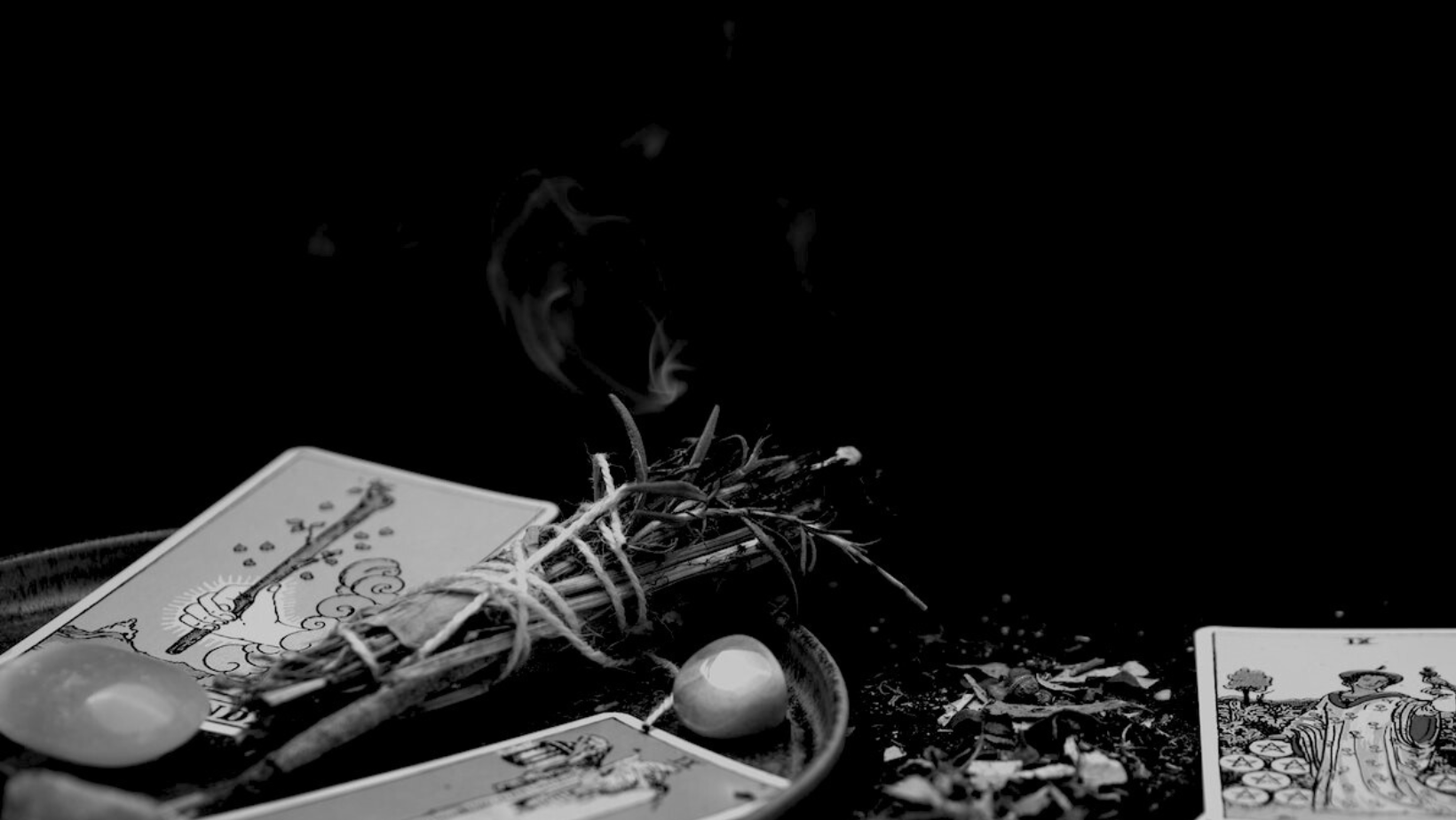
In 1910, the Rider-Waite tarot deck (see photo above) was published, the most popular deck in the English-speaking world, and was illustrated by Pamela Colman Smith (who received no credit and died penniless). This deck is often recommended for beginners. Its illustrations are universally easier to understand than those of other decks and are widely used in study materials, books, and television shows.
The Chronological History of Tarot
The 1200s
- The very first paper mills were built in Italy.
The 1300s
- Playing cards appear in Italy and Spain, likely via Islamic Mamluk cards (with suits and court cards).
- 1356-74. Several written accounts refer to cards being played in Europe.
- Petrarch writes the poem "Trionfi".
- Winning a game of Trionfidepends upon "triumphing" over the preceding card that was played.
- Germany begins printing on paper.
- Arab cards are changed to reflect Italian suits, swords, batons, cups, and coins.
- Spain refers to cards in Europe as "Naip", which are typically Saracen or Moorish cards. It is thought they were called "Naip" because there was a French card maker named Rodrigo Borges, who was called a "Naipero", meaning "playing card". Much later, the cards are called "Carte da Trionfi".
The 1400s
- Sagramoro of Florence, a painter, was commissioned to create and repair luxurious decks for the Marchesa Parisina of Ferrara. Ferrara's account book mentions painted batons (wands), swords, cups, coins, and figures for four decks.
- Duke Filippo Maria Visconti of Milan, mentioned earlier, commissioned a card game with extra trump cards.
- The Marchese of Ferrara purchased two decks for his younger brothers. Francesco Sforza, Duke of Milan, requests two decks by Sunday within the same week. Meaning, packs were readily available.
- A large mural of Tarocchi players is painted on a wall of Borromeo Castle (Milan). Presses owned by Count Borso of Ferrara mass-produce cheap playing cards. He also loaned out his printing blocks. Count Borso also commissions the artist da Vicenza to create two luxurious decks of Carte Grande da Trionfi containing 70 cards.
- An uncut sheet of playing cards was found containing fragments of suits and court cards.
- The Sermones de Ludo Cum Aliis was written by a priest preaching against gambling. The priest listed the major arcana cards (the trumps) with the same names and the same order used today.
- There are written accounts of the manufacture of "Trionfi" and playing cards in Spain. French symbols begin to appear.
- Regular card games were converted to the suits we know today. The Sola Buscadeck features images from the minor arcana. Gambling is prohibited, but Tarot is not due to the ruling classes. Card manufacturing switched over to France after Italy was conquered.
The 1500s
- Printed wood-block cards survive with the typical Tarot de Marseilles
- Decks begin to appear that depict the 12 astrological signs and the four elements.
- Trionfi and Tarot are now two separate games.
- In Venice, the cards are related to interpreting fate.
- Giulio Bertoni wrote an essay, "Tarocchi Verification", which includes the names and order of the tarot trumps.
- The first printed account of a game of Tarot comes about.
The 1600s
- The Parisian block-printed deck survives.
- The first printed rules of the game are seen in a pamphlet.
- A Belgian pattern appears.
- A deck by Jean Noblet closely resembles the Tarot de Marseille
- Tarocchi was introduced in Sicily with fewer cards and different imagery.
- Mitelli Tarotis was produced in copper engraving.
The 1700s
- Various decks are created all over the world.
- Tarot is at its height of popularity.
- Decks and rules are regulated and standardized.
- The divinatory meanings of certain cards were discovered in Bologna.
- The manuscript instructs the reader to separate the cards into piles, but fails to specify what to do afterward.
- Double-headed trumps are invented.
- Much more is printed concerning how to play the "game" with various decks.
- Etteilla (Paris) writes How to Entertain Oneself with a Pack of Cards and mentions the Tarot for divination.
- Antoine Court de Gebelin links Tarot with the Hebrew alphabet in print.
The 1800s
- D'Odoucet publishes a book on Etteilla's teachings, which is the basis for many Rider-Waite minor arcana meanings.
- The term "arcana" is first used in reference to the cards.
- Arthur Waite uses the reading techniques used by British soldiers' wives to give meaning to the minor arcana.
- Mathers (London) writes and publishes The Tarot: Its Occult Signification, Use in Fortune Telling, and Method of Play.
The 1900s
- Numerous writers in the 20th century made the teachings of Tarot accessible to a broader audience.
- Arthur Waite's Rider-Waite deck, illustrated by Pamela Coleman, and his book, The Pictorial Key to Tarot, show illustrations for all 56 Minor Arcana cards. The Justice card (#8) becomes the 11th card, and the Strength card (#11) becomes #8.
- The Tarot of the Bohemians by Papus (1889) is translated into English.
- Aleister Crowley publishes a magazine, The Equinox.
- Paul Marteau publishes Le Tarot de Marseille, which teaches one to pay attention to imagery, numbers, and colors rather than esoteric correspondences.
- The Witchcraft Act was repealed in Britain, and tarot decks can be printed and sold freely.
- The Rider-Waite deck gains worldwide distribution, Eden Gray publishes The Tarot Revealed, and S. Games Systems begins issuing tarot cards. It also purchases rights to the Rider-Waite deck.
- Llewellyn, founded in 1901, becomes one of the world's major tarot deck publishers and partners with Lo Scarabeo, an Italian publisher.
- By the mid-1990s, Tarot had become global through the internet.
So, How is a Deck of Tarot Used Today?
While you can still find theatrical fortune tellers at psychic fairs, Tarot is primarily utilized today as a healing tool that enhances one's intuition by exploring the images and placements of the cards. How does this work? Each card in a Tarot deck corresponds to various aspects of life, including life lessons, daily activities, health matters, and natural healing remedies. Therefore, viewing the cards is akin to holding up a mirror that reflects your current challenges, strengths, and potential opportunities.

Taroscendence Consultations
A Healthy Nudge in the Right Direction
No Traveling . No Face-to-Face . No Appointment Necessary

