


The Origin of Tarot
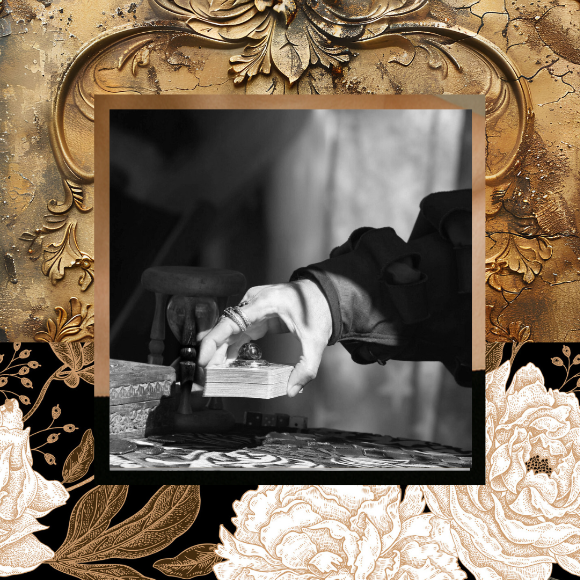
Many people have explored the origins of Tarot, but I would like to share my insights to help you understand its history, if you're interested. Over the past hundred years, Tarot has been used as a card game and for fortune-telling. However, it's only been in the past couple of decades that Tarot has been recognized as a tool to amplify one's inner voice of intuition.
Initially, Tarot was simply a regular deck of playing cards. It was not intended to intuit personal insight, divination, or fortune-telling. The earliest decks of the Tarot varied in their number of cards. They were created, for the most part, for entertainment purposes and occasionally for educational purposes.
But where do the cards come from? The origin of the Tarot has yet to be discovered. Some say the Tarot may have originated in China, India, Persia, Saudi Arabia, Europe, or Egypt. However, this has never been proven. Some of these connections have been encouraged to deepen the mystery and sales of the cards themselves.
Regular playing cards are known to have existed in China and the Middle East as early as the 10th century. However, these cards were very different from cards found later in Europe and weren't considered Tarot cards. Furthermore, "Tarot" is likely derived from the Italian word for cards, "Tarocchi." This word is recorded in Italy during the 15th century, when many believe the game of Tarot originated as it is used today. They were known as "Taraux" in France around the same time.
In the beginning, a deck of Tarot contained only twenty-two cards with images. These images varied depending on the area in which they were created and the hand-painting method used. For example, older cards designed in the area that now comprises Germany were illustrated with scenes of kings, queens, and animals. Images created on the cards were left to the artist's discretion, based on what he favored or considered popular at the time. For example, in 1424, the Greek Emperor visited Filippo Maria Visconti, Duke of Milan (Italy), to request assistance against the Ottomans. During his visit, he offered to commission a deck of cards. Sixteen Greek gods were chosen as images. The duke's wife soon gave birth to a daughter, Bianca Maria Visconti, who, years later, was involved in the production of "Carte da Trionfi", which was much later referred to as "Tarot" decks.
Other decks from other parts of the world featured scenes from religious or Greek mythology. Some even included images of daily tasks, such as carving meat. Later, images of the Empress and the Emperor, the High Priestess (a female figure of authority), and the Hierophant (a male figure of authority) emerged. Still, these cards were primarily used for card games rather than metaphysical purposes.
As time passed, images changed, and card-playing came under increasing scrutiny by the Church. Gambling was outlawed. Any images that appeared to be religious in any way were removed. These card images were replaced with others because the Church deemed them blasphemous. In 1432, the Church denounced card-playing as "the work of the devil." And again, in the 1570s, the Church outlawed card playing (gambling) and theatre because both were seen as worshipping false gods. However, Tarot was not banned, as it had become a recreational mainstay in upper-class society by this time.
Eventually, another fifty-six cards were added to the deck as "Suits". It was only when the suits were added that the original 22 cards came to be known as the Major Arcana, considered archetypal. Each of the twenty-two cards represents an archetype that conveys an important lesson one is learning or needs to learn to become whole.
Each of the four suits, known as the Minor Arcana, contains 14 cards: Ace, King, Queen, Knight, Page, and 9 numbered cards from 2 to 10. The Suits comprise Wands, Swords, Cups, and Coins (some say Pentacles). The suits represent facets of everyday life: human passions and desires (Wands), thoughts and conflicts (Swords), emotions and feelings (Cups), and material and financial concerns (Coins). Initially, the minor cards numbered 1-10 contained no images other than a certain number of Wands, Swords, Cups, or Coins.
The suits can be played like modern-day cards, except that, unlike modern playing cards, they contain a Knight, which must be removed. The Tarot page becomes Jack, and the Tarot Fool can pose as the Joker. In a regular card game, the Wands represent Clubs, the Swords represent Spades, the Cups represent Diamonds, and the Coins represent Hearts. Looking at it this way, one can easily read one's fortune with a deck of regular playing cards as long as one knows the Tarot cards' meanings.
In the late 1700s, Tarot gained popularity as a divination tool, primarily due to Antoine Court de Gebelin's book, in which he claimed that the cards' images contained secret messages about civilization. And who doesn't love a good mystery? He also suggested that the secrets were handed down from Egyptian priests in images to keep them safe from those who sought religious dominance. This enthusiasm for the Egyptian connection was swept up by many others, including the authors of The Golden Dawn, of whom Arthur Waite was a member. The idea that Tarot was somehow associated with forbidden knowledge was used to market Tarot books, decks, and readings. This type of marketing only reinforced the acceptance of Egyptian origins and the idea that Tarot spread to the rest of the world by "gypsies". To reiterate, this has not been proven. So that you know, Arthur Waite reversed the placements of the Strength and Justice cards of the Major Arcana.
.
There are hundreds of Tarot decks to choose from today. All modern-day Tarot decks are said to have descended from the ancient French Tarot of Marseilles, created in 1760 by Nicholas Conver.
In 1910, the Rider-Waite tarot deck (see photo above), the most popular deck in the English-speaking world, was published and illustrated by Pamela Colman Smith (who received no credit and died penniless). This deck is often recommended for beginners. Its illustrations are universally easier to understand than those of other decks and are widely used in study materials, books, and television shows.
But Wait? Isn't Tarot Evil?
Many people are under the impression that Tarot is evil, an opinion derived from religion and pop culture, which have used Tarot to manipulate and promote scare-factor in the media. However, the Tarot was originally a card game, period. It's made of paper and ink and has no power of its own (none whatsoever). Guns are made of metal and wood, and syringes are made of metal and glass (or plastic), but are either inherently evil or have the power to injure unless placed in the wrong hands? It's not what a thing is that makes it evil. It's what you do with it. In the right hands, Tarot can be extremely useful for inner transformation, helping you magnify your intuition and identify your next best step on your wellness journey.
Tarot was never intended to take the place of your spiritual beliefs, faith, prayer, meditation, or values. Its purpose was to add to them. Your relationship to your higher power (God, whatever that means to you) ALWAYS comes first. Furthermore, God is not against using the Tarot (unless used for fortune-telling) any more than guns or needles. Tarot has no power of its own. The cards are only pieces of paper with ink splotches forming words and pictures. Meaning the only evil attached to it is self-assigned.
If you use Tarot to manipulate, dominate, or instill fear in others, then, yes, in your hands it's evil. However, Tarot can be harmful when you allow it to make decisions for you. It can also be harmful when you allow the cards to predict future events. In these instances, you're giving away your free will and personal power, which isn't mentally, emotionally, or spiritually healthy. You always have a choice. Regardless of what the cards reveal, it comes down to what you decide based on your intuition and gut feeling.
Let's say you're thinking about breaking up with your mate, and the cards lean toward a breakup. Should you rush home and pack your bags just because Tarot said so? No! If that's what you want to do and Tarot validates it for you, then you might do that, but if you feel that isn't what you want, you have free will to go against what Tarot says and go home and work on your relationship. In other words, picking up the cards to receive answers and insights you may or may not intuitively agree with is fine. On the other hand, depending on Tarot to tell you what to do or direct every detail of your life isn't. The purpose of Tarot isn't to take away free will but to help you realize you have it.
Another way the Tarot can be harmful is when using the cards conflicts with your religious or cultural beliefs, leading to negative self-judgment, inner turmoil, condemnation, guilt, or shame. I know this well. If you can't reconcile using Tarot, don't. You'll only stress yourself out. Find another way to magnify your intuition, such as by choosing a scripture book for a message. Hold the book, close your eyes, turn to a page that feels "right," place your finger on the page (anywhere that feels right), open your eyes, and read the message you pointed to.

